
Introduction
Kumkuma Puja in Sravana Masam: Benefits, Pooja Procedure & Samagri List
Kumkuma Puja in Sravana Masam is a traditional devotional practice followed by many Hindu families, particularly on auspicious days such as Sravana Fridays. The ritual is associated with the worship of Goddess Lakshmi, Goddess Parvati and the Divine Feminine, depending on regional customs and family traditions.
Sravana Masam is traditionally considered an important period for prayers, vrathams, temple visits and special poojas. For many families, it is also a time to continue devotional practices passed down through generations.
Kumkum and turmeric have a special place in Hindu rituals. During Devi worship, they are traditionally associated with auspiciousness, devotion and reverence for Shakti.
If you are planning to perform Kumkuma Puja at home during Sravana Masam, this guide explains its importance, traditional benefits, simple pooja procedure, required samagri and preparation tips.
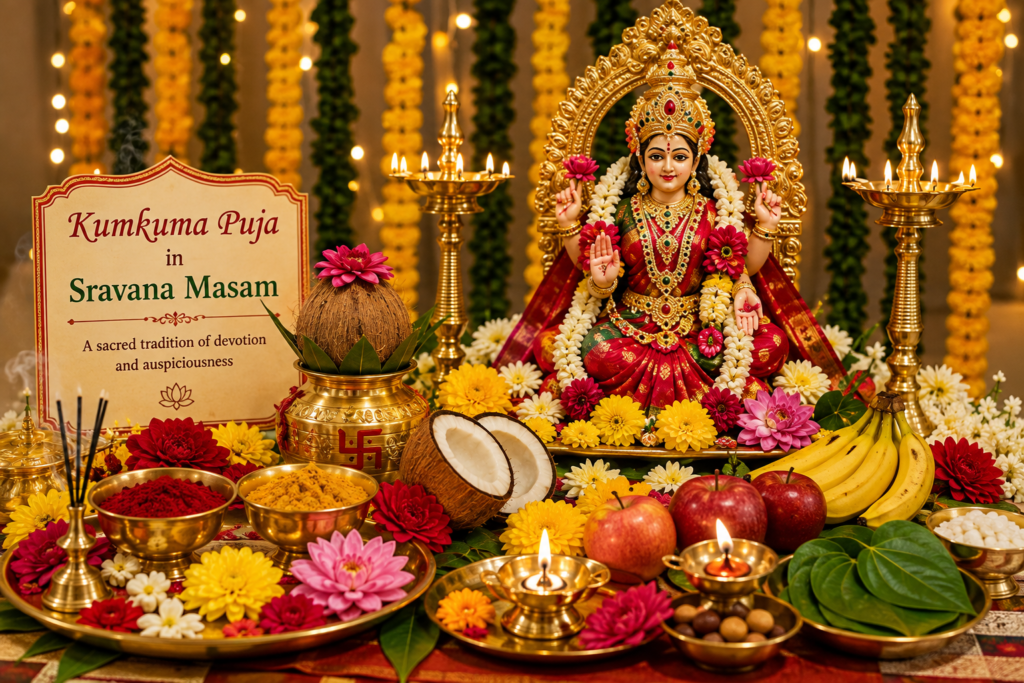
Kumkuma Puja is a traditional Hindu devotional ritual in which kumkum, turmeric, flowers, lamps and other offerings are presented to a deity, commonly Goddess Lakshmi or Devi.
The exact procedure can vary according to:
- Regional traditions
- Family customs
- The deity being worshipped
- The specific vrata or pooja
- Local religious practices
Kumkum is commonly used during Hindu ceremonies and Devi worship as a symbol of auspiciousness and reverence.
The primary purpose of Kumkuma Puja is devotional. Devotees perform the ritual to pray, express gratitude, follow family traditions and seek divine blessings.
Why Is Sravana Masam Important for Pooja?
Sravana Masam is traditionally regarded as an important month for Hindu devotional activities. Many devotees observe special prayers, fasting, temple visits and Goddess or Lord Shiva worship during this period.
In Andhra Pradesh and Telangana, Sravana Masam is commonly associated with:
- Sravana Fridays
- Goddess Lakshmi worship
- Varalakshmi Vratham
- Shiva worship
- Devi worship
- Traditional women’s poojas
- Kumkum and turmeric offerings
- Charity and devotional activities
Because customs can differ between regions and families, devotees should follow the lunar calendar and traditions applicable to their location and family.
Importance of Kumkuma Puja in Sravana Masam
Kumkuma Puja during Sravana Masam provides an opportunity for devotees to dedicate time to Goddess worship and traditional prayer.
1. Worship of Shakti
Kumkum is traditionally associated with Shakti, or Divine Feminine energy. Offering kumkum during Devi worship provides an opportunity to express reverence toward the Goddess.
2. Goddess Lakshmi Worship
When the puja is dedicated to Goddess Lakshmi, devotees traditionally pray for:
- Prosperity
- Abundance
- Family happiness
- Peace
- Auspiciousness
- Well-being
These are matters of religious belief and should not be understood as guaranteed outcomes.
3. Preserving Family Traditions
Sravana Masam gives families an opportunity to continue traditional devotional practices and pass them from one generation to another.
Children can participate in simple preparations such as arranging flowers, fruits and pooja materials under adult supervision.
4. Creating a Peaceful Prayer Environment
Lighting a diya, chanting prayers and spending time in devotion can create a calm and spiritually focused environment.
For many families, the value of the ritual comes from devotion, gratitude and spending meaningful time together.
Traditional Benefits of Kumkuma Puja
The benefits of Kumkuma Puja are understood primarily through Hindu faith and tradition. Devotees perform the ritual to express devotion, cultivate gratitude, seek divine blessings and maintain auspicious family practices.
Traditional devotional benefits include:
- Seeking Goddess Lakshmi or Devi’s blessings
- Encouraging spiritual discipline
- Creating a regular prayer routine
- Preserving cultural traditions
- Bringing family members together for prayer
- Expressing gratitude
- Creating a positive devotional atmosphere
- Maintaining a connection with traditional worship
It is important to understand these as traditional religious beliefs rather than guaranteed material, financial or health outcomes.
How to Perform Kumkuma Puja at Home
A simple Kumkuma Puja can be performed at home by preparing the pooja space, arranging the Goddess idol or photograph, lighting a lamp, offering turmeric, kumkum and flowers, presenting naivedyam, chanting prayers and performing aarti.
Follow your family’s traditional procedure whenever applicable.
Step 1: Clean the Pooja Area
Clean your prayer room or designated pooja space before beginning.
You may decorate the entrance with a traditional rangoli or muggu according to your custom.
Step 2: Arrange the Goddess
Place a clean Goddess Lakshmi, Devi or family deity image or idol on the pooja platform.
Decorate the area with flowers and other traditional decorations if desired.
Step 3: Arrange the Pooja Materials
Keep all required materials ready before starting the pooja.
This avoids interruptions and helps you perform the ritual in an organized manner.
Step 4: Light the Diya
Light a traditional oil or ghee lamp and incense according to your family tradition.
Make sure lamps are placed safely away from curtains, paper and other flammable materials.
Step 5: Begin With Ganesha Prayer
Many Hindu worship traditions begin by praying to Lord Ganesha before proceeding with the main deity worship.
Follow the prayer sequence traditionally followed by your family.
Step 6: Offer Kumkum and Turmeric
Offer turmeric, kumkum, akshata and flowers to the Goddess according to your tradition.
Step 7: Offer Naivedyam
Offer fruits, sweets or homemade food as naivedyam.
The type of offering can vary according to regional and family customs.
Step 8: Chant Prayers
Recite Lakshmi, Devi or family-specific prayers according to your customary practice.
Step 9: Perform Aarti
Complete the main worship with aarti.
Step 10: Distribute Prasadam
Share the prasadam with family members and guests according to your tradition.
Note: Pooja procedures can vary considerably. If you are performing a specific vrata or elaborate ritual, follow your family’s established practice or consult a knowledgeable priest.
Kumkuma Puja Samagri List
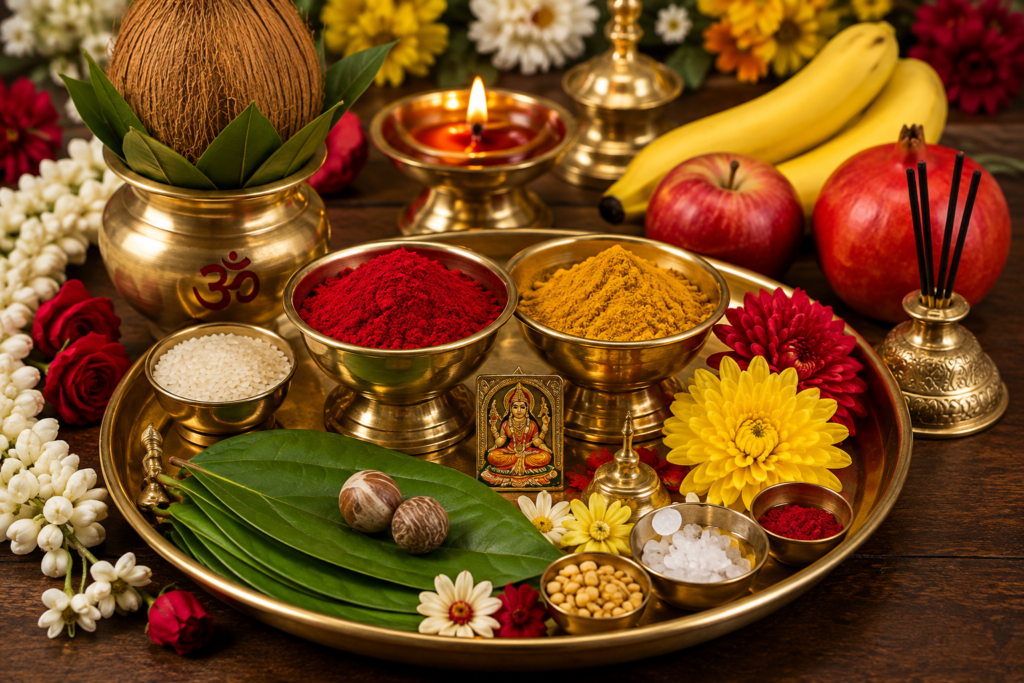
Preparing the required materials in advance can make the pooja more convenient.
Essential Kumkuma Puja Items
| Pooja Item | Common Use |
|---|---|
| Goddess Lakshmi/Devi idol or photo | Main deity worship |
| Kumkum | Traditional offering |
| Turmeric | Pooja and auspicious rituals |
| Akshata | Traditional offering |
| Fresh flowers | Offering and decoration |
| Garland | Decoration |
| Coconut | Offering |
| Betel leaves | Traditional offering |
| Betel nuts | Pooja |
| Fruits | Naivedyam |
| Sweets or homemade food | Naivedyam |
| Diya | Lighting |
| Oil or ghee | Deepam |
| Incense sticks | Pooja |
| Camphor | Aarti |
| Pooja plate | Arranging materials |
| Bell | Pooja |
| Aarti plate | Aarti |
Additional items may be needed depending on the particular pooja and family tradition.
How to Prepare Your Pooja Materials in Advance
Preparing everything at the last minute can make a devotional occasion stressful. A simple checklist can make the process easier.
Check Your Existing Supplies
Before shopping, check which pooja materials you already have at home.
Prepare Non-Perishable Items Early
Items such as kumkum, turmeric, camphor, incense, cotton wicks and pooja vessels can be organized in advance.
Purchase Fresh Items Closer to the Pooja
Flowers, fruits, coconut and other fresh materials can be purchased according to your requirements.
Keep Everything Together
Arrange the items in a pooja box or traditional plate so they are easy to find when needed.
Why Use a Complete Pooja Kit?
Preparing for a festival can involve visiting several shops to collect individual items. A complete pooja kit can make the process more convenient by keeping commonly required worship materials organized in one place.
A pooja kit can help:
- Save shopping time
- Keep pooja materials organized
- Reduce the possibility of forgetting small essentials
- Make preparation easier for busy families
- Help first-time devotees organize their requirements
- Make temporary or travel pooja setups more convenient
A pooja kit is not mandatory for performing Kumkuma Puja. It is simply a convenient way to organize commonly required materials.
Always check the exact contents of a kit because requirements differ according to the particular pooja.
Prepare Your Sravana Masam Pooja
If you are preparing for Kumkuma Puja, Sravana Masam Pooja or Varalakshmi Vratham, having your pooja essentials ready in advance can make preparation easier.
SS FARMS provides pooja essentials and Varalakshmi Vratham Pooja Kit options for families looking for a convenient way to organize commonly required pooja materials.
Instead of spending time searching for individual items, you can check the available SS FARMS pooja products and select the option that suits your requirements.
Why Choose a Complete Pooja Kit?
Convenient preparation: Keep commonly required items organized.
Less shopping: Reduce the need to visit multiple shops for basic pooja essentials.
Better organization: Keep materials together before the pooja.
Festival convenience: Prepare your requirements before the auspicious day.
🛍️ Ready for Your Sravana Masam Pooja?
Don’t wait until the last minute to collect your pooja essentials.
Prepare your Kumkuma Puja and Sravana Masam Pooja requirements in advance with SS FARMS.
SS FARMS – Pooja Essentials
Complete your pooja preparation with tradition and convenience.
📞 WhatsApp / Order: +91 90145 00251
🌐 Website: www.ssfarms.co.in
👉 Contact SS FARMS today to check the available pooja kits and current product details.
Sravana Masam Kumkuma Puja Quick Checklist
Before beginning your pooja, check:
- Pooja area cleaned
- Goddess Lakshmi/Devi idol or photo ready
- Kumkum
- Turmeric
- Akshata
- Fresh flowers
- Garland
- Coconut
- Betel leaves
- Betel nuts
- Fruits
- Naivedyam
- Diya
- Oil or ghee
- Incense sticks
- Camphor
- Pooja plate
- Bell
- Aarti plate
Who Can Perform Kumkuma Puja?
Kumkuma Puja practices vary across families and communities.
Many women traditionally perform Devi and Lakshmi worship during Sravana Masam, while other family members may participate in prayers and offerings according to their customs.
The important point is to respect your family’s established tradition.
If you are performing a specific vrata or elaborate ritual, consult a knowledgeable priest for the appropriate procedure.
Common Mistakes to Avoid During Kumkuma Puja
1. Not Preparing Materials in Advance
Create a checklist before the pooja day.
2. Buying Unnecessary Items
Follow the requirements of your specific family tradition instead of purchasing every item available.
3. Ignoring Regional Customs
Sravana Masam practices differ between regions. Follow the traditions applicable to your family.
4. Focusing Only on Decoration
Beautiful decorations are optional. Devotion and sincerity are central to traditional worship.
5. Making Guaranteed Claims
Religious rituals should not be presented as automatically guaranteeing wealth, health or other specific outcomes.
Frequently Asked Questions
What is Kumkuma Puja in Sravana Masam?
Kumkuma Puja is a traditional devotional practice involving kumkum, turmeric, flowers and other offerings to Devi or Goddess Lakshmi. During Sravana Masam, many families perform this worship as part of their traditional devotional observances.
Can Kumkuma Puja be performed at home?
Yes. A simple Kumkuma Puja can be performed at home by cleaning the pooja area, arranging the Goddess idol or photo, preparing the required materials, offering kumkum and other items, reciting prayers and performing aarti according to family tradition.
Why is kumkum important in Hindu worship?
Kumkum is traditionally associated with auspiciousness and Shakti. It is used in many Hindu ceremonies and devotional practices and is commonly offered to Goddess forms during worship.
Can Kumkuma Puja be performed on Sravana Fridays?
Yes. Sravana Fridays are commonly observed by many devotees with special Goddess Lakshmi or Devi worship. The exact ritual and timing should follow the applicable regional calendar and family tradition.
What are the main Kumkuma Puja items?
Common items include kumkum, turmeric, flowers, akshata, coconut, fruits, betel leaves, diya, oil or ghee, incense, camphor and naivedyam.
Is fasting compulsory for Kumkuma Puja?
There is no universal fasting rule for every Kumkuma Puja. Fasting practices vary according to the specific vrata, family tradition and individual circumstances.
Can unmarried women perform Kumkuma Puja?
Practices vary between families and communities. Unmarried women may participate in devotional worship according to their family customs and traditions.
Can children participate in the puja?
Yes. Children can participate in simple activities such as arranging flowers, helping prepare the pooja area and joining devotional prayers under appropriate adult supervision.
What can be offered as naivedyam?
Fruits, sweets and traditional homemade preparations can be offered. The exact naivedyam depends on family and regional traditions.
Do I need a priest for Kumkuma Puja?
A priest is not necessarily required for a simple home puja. However, priestly guidance can be useful for specific vrathas or elaborate traditional rituals.
Conclusion
Kumkuma Puja in Sravana Masam is a meaningful devotional practice that allows families to connect with Goddess worship, traditional customs and prayer.
From preparing the pooja area and arranging kumkum and turmeric to offering flowers, fruits and naivedyam, advance preparation can make the experience more organized and peaceful.
For families who prefer convenience, a complete pooja kit can help keep commonly required materials together and reduce the need for last-minute shopping.
If you are preparing for Sravana Masam Kumkuma Puja or Varalakshmi Vratham, explore the available pooja essentials from SS FARMS.
📞 WhatsApp / Order: +91 90145 00251