
Badari Patram (Regu Aaku): Significance, Mantra & Ganesh Pooja Guide
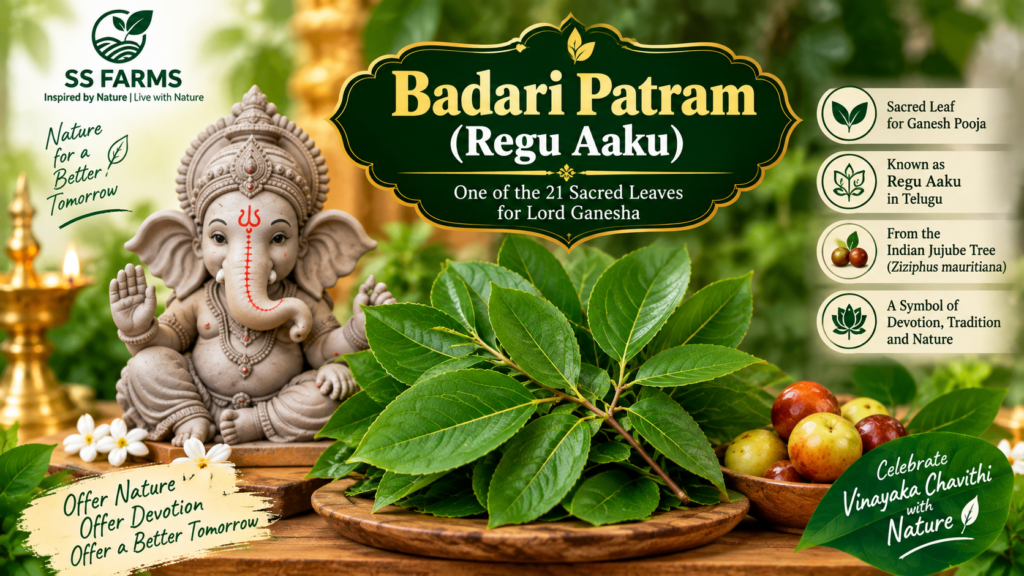
Badari Patram (Regu Aaku): Significance, Mantra & Vinayaka Chavithi Pooja Guide
Badari Patram, known as Regu Aaku (రేగు ఆకు) in Telugu, is one of the traditional leaves used in the 21 Patralu (Ekavimshati Patra Puja) offered to Lord Ganesha during Vinayaka Chavithi. In commonly followed puja traditions, Badari Patram is offered while chanting the name Lambodaraya.
For families preparing for Vinayaka Chavithi, finding all 21 sacred leaves can sometimes be difficult. Knowing the correct local name, appearance and traditional offering can make the pooja preparation easier and more meaningful.
What Is Badari Patram?
Badari Patram refers to the leaf of the Indian jujube tree, botanically identified as Ziziphus mauritiana. The plant has several regional names. In Telugu, it is commonly known as Regu / Regu Aaku, while Badari is a Sanskrit name and Ber is a commonly used Hindi name.
The Indian jujube is a tree found across tropical and dry regions of India. Its leaves are used traditionally in religious practices, including the 21-leaf offering associated with Lord Ganesha.
Badari Patram at a Glance
- Sanskrit: Badari Patram
- Telugu: రేగు ఆకు / రేగు పత్రం
- Common name: Indian Jujube
- Hindi: Ber
- Botanical name: Ziziphus mauritiana
- Puja: 21 Patralu / Ekavimshati Patra Puja
- Ganesha name associated with the offering: Lambodara
Why Is Badari Patram Offered to Lord Ganesha?
The offering of 21 different leaves is an important traditional feature of Ganesh Chaturthi worship. The practice is commonly known as Ekavimshati Patra Puja, meaning worship using twenty-one leaves. Each leaf is traditionally associated with a particular name of Lord Ganesha.
Badari Patram is associated with Lambodara, one of the revered names of Lord Ganesha.
The devotional offering is traditionally made by chanting:
“Om Lambodaraya Namah – Badari Patram Samarpayami.”
This means offering Badari Patram to Lord Ganesha while invoking the name Lambodara.
The ritual is less about simply placing a leaf before the deity and more about combining devotion, traditional practice and mindful worship.
Badari Patram – Regu Aaku in Telugu
For Telugu-speaking families, one of the easiest ways to identify this Patram is by its local name:
బదరీ పత్రం – రేగు ఆకు
This is useful when purchasing or collecting the 21 Patralu because the same plant can have completely different names in different Indian languages.
The Indian Flora database lists Regu and related names as Telugu vernacular names for Ziziphus mauritiana.
Therefore, when looking for Badari Patram for Vinayaka Chavithi, asking specifically for Regu Aaku / రేగు ఆకు can help Telugu families communicate more easily with local sellers.
Badari Patram in the 21 Patralu
Badari Patram is traditionally included among the 21 leaves offered during Ganesh Puja. A commonly followed sequence includes leaves such as Machi, Bruhati, Bilva, Durva, Datura, Badari, Apamarga and other Patralu.
The important point is that the 21 Patralu are traditionally offered as a complete devotional set, rather than treating one particular leaf as a replacement for the entire collection.
For devotees who want to follow the traditional 21 Patra Puja, having the complete set prepared before the pooja can make the ceremony more convenient.
How to Offer Badari Patram During Ganesh Pooja
If your family follows the 21 Patralu tradition, Badari Patram can be offered according to your customary puja sequence.
A simple approach is:
- Clean the pooja area and prepare the Ganesha idol.
- Keep the 21 Patralu clean and organized.
- Identify the Badari Patram / Regu Aaku.
- Take the leaf respectfully.
- Chant “Om Lambodaraya Namah.”
- Offer the Badari Patram to Lord Ganesha.
- Continue with the remaining Patralu according to your family or priest’s prescribed sequence.
Because regional traditions and the ordering of the 21 leaves can vary, families should follow the method traditionally followed in their household or advised by their priest.
Why Getting All 21 Patralu Together Is Convenient
One of the biggest challenges before Vinayaka Chavithi is collecting all the required Patralu.
Some leaves are commonly available, while others can be difficult to identify or source. Different regional names can also create confusion.
For example:
Badari → Regu Aaku
Apamarga → Uttareni
Bilva → Maredu/Bilva
Datura → Ummetta
When the leaves are already identified and organized as a 21 Patralu set, devotees can spend less time searching and more time preparing for the festival.
This is particularly helpful for busy families, apartment residents, working professionals and devotees who want a convenient traditional pooja preparation.
Badari Patram and the Connection Between Nature & Worship
One of the beautiful aspects of 21 Patralu Puja is the connection between nature and devotion.
Instead of using only manufactured decorative materials, the traditional ritual incorporates leaves and plant materials. This gives families an opportunity to recognize and learn about plants that are part of India’s cultural and traditional heritage.
For children, the 21 Patralu can also become an interesting way to learn the names of plants in Telugu and other Indian languages while participating in Ganesh Chaturthi preparations.
Choose Fresh & Traditionally Prepared 21 Patralu
If you are preparing for Vinayaka Chavithi and looking for 21 Patralu for Ganesh Pooja, choosing a properly identified and carefully prepared set can make your preparation much easier.
At SS FARMS, the 21 Patralu collection is prepared for devotees who want to follow the traditional Ganesh Pooja practice with convenience.
The collection can be especially useful for people searching for:
- 21 Patralu for Vinayaka Chavithi
- Badari Patram / Regu Aaku
- Ganesh Pooja leaves
- Vinayaka Chavithi pooja essentials
- Traditional Ganesh Pooja items
- Natural pooja products
Make Your Vinayaka Chavithi Preparation Easier
Instead of spending days searching for individual leaves, a prepared 21 Patralu set can help you organize your pooja requirements in advance.
Prepare your Patralu. Prepare your Pooja. Celebrate Vinayaka Chavithi with tradition and devotion.
📞 Order / Enquiries: 9014500251
🌿 SS FARMS – Inspired by Nature | Live with Nature
🌐 ssfarms.co.in
Frequently Asked Questions
1. What is Badari Patram?
Badari Patram is the leaf of the Indian jujube tree, Ziziphus mauritiana. It is traditionally included among the 21 Patralu offered to Lord Ganesha.
2. What is Badari Patram called in Telugu?
Badari Patram is commonly known as Regu Aaku (రేగు ఆకు) in Telugu.
3. What is the mantra for Badari Patram?
A commonly followed 21 Patra Puja mantra is:
“Om Lambodaraya Namah – Badari Patram Samarpayami.”
4. Is Badari Patram part of the 21 Patralu?
Yes. Badari Patram is traditionally included in lists of the 21 leaves offered during Ganesh Chaturthi worship.
5. What is the botanical name of Badari?
The Indian Flora database identifies the plant as Ziziphus mauritiana Lam. and lists Regu among its Telugu vernacular names.
6. Where can I get 21 Patralu for Vinayaka Chavithi?
You can order a prepared 21 Patralu Pooja Kit from SS FARMS for convenient Vinayaka Chavithi preparation.
Conclusion
Badari Patram – Regu Aaku is more than simply a leaf used during Vinayaka Chavithi. It is part of the traditional 21 Patralu Puja, connecting devotion with India’s rich plant and cultural traditions.
As Vinayaka Chavithi approaches, preparing the Patralu in advance can make your pooja more organized and peaceful. If collecting all 21 leaves individually is difficult, a prepared set can save time while helping you follow this beautiful traditional practice.
Bring tradition, nature and devotion together this Vinayaka Chavithi with SS FARMS 21 Patralu.
📞 9014500251 SS FARMS
🌿 21 Sacred Patralu | Natural & Traditional Pooja Essentials