
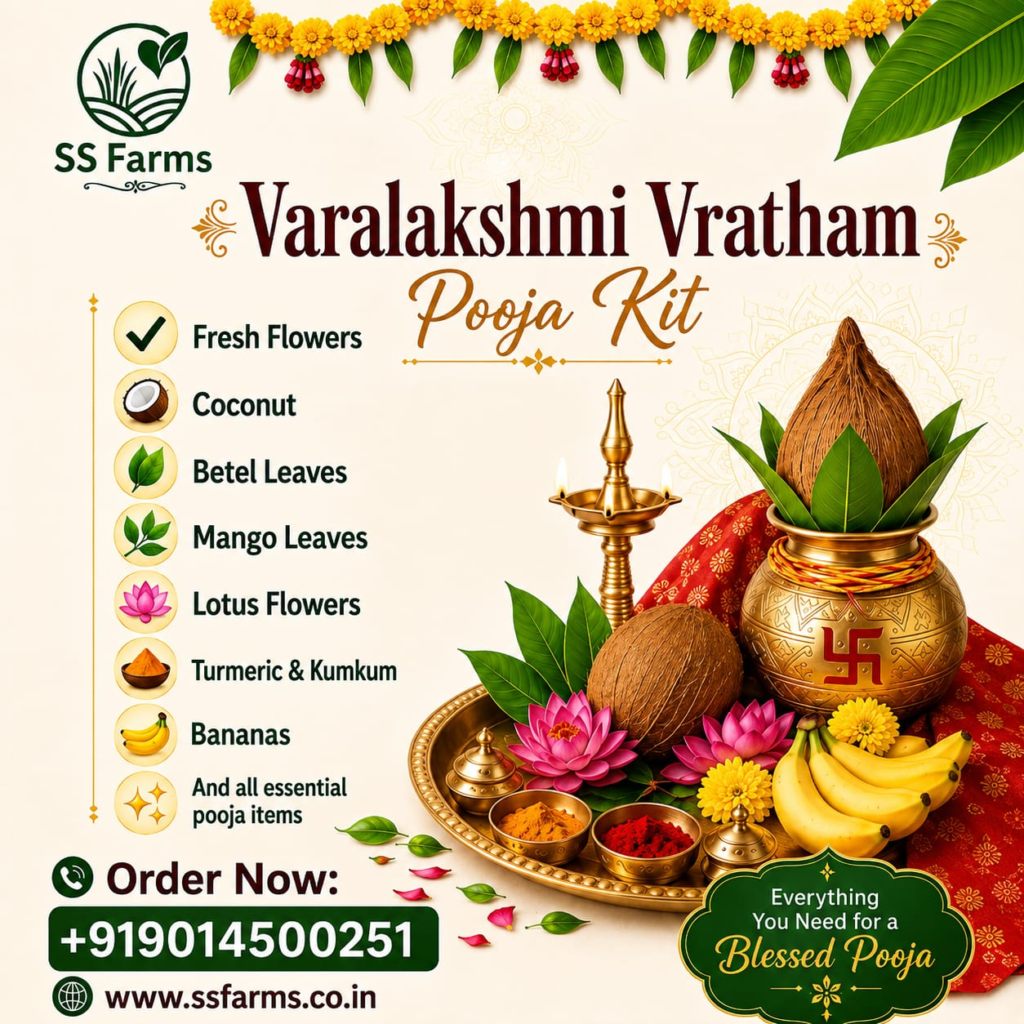
Varalakshmi Vratham Pooja Samagri | Complete List
Varalakshmi Vratham Pooja Samagri includes the traditional items used to prepare and perform Varalakshmi Pooja at home. A well-organized collection may include coconuts, fruits, betel leaves, flowers, turmeric, kumkum, ghee, cotton wicks, camphor, incense sticks, sacred thread, Lakshmi decorations, and other essential pooja materials.
Preparing for Varalakshmi Vratham is an important part of the festival. From arranging fresh flowers and fruits to preparing the Kalash, Lakshmi decoration, lamps, offerings, and prasadam, having the required Varalakshmi Vratham Pooja Samagri ready beforehand makes the celebration more organized and convenient.
Many families purchase pooja materials separately, which can sometimes make it difficult to remember smaller essentials such as cotton wicks, camphor, sacred thread, turmeric, kumkum, or incense sticks.
This complete guide provides a practical Varalakshmi Pooja items list, explains what each item is commonly used for, and gives useful preparation tips for celebrating Varalakshmi Vratham at home.
What Pooja Samagri Is Needed for Varalakshmi Vratham?
A typical Varalakshmi Vratham setup may require a Kalash, coconut, mango leaves, flowers, fruits, betel leaves, betel nuts, turmeric, kumkum, Akshinthalu, lamps, cotton wicks, ghee or oil, camphor, incense sticks, sacred thread, cloth, Lakshmi decorations, and offerings. Additional items may be included according to regional and family traditions.
What Is Varalakshmi Vratham Pooja Samagri?
Varalakshmi Vratham Pooja Samagri refers to the collection of materials traditionally used for worshipping Goddess Varalakshmi. These materials support different parts of the ceremony, including Kalash preparation, decoration, offerings, lighting lamps, aarti, and other customary rituals.
The exact list differs between families and regions, so there is no single universal checklist. However, several items are commonly found in a traditional Varalakshmi Pooja setup.
Complete Varalakshmi Pooja Items List
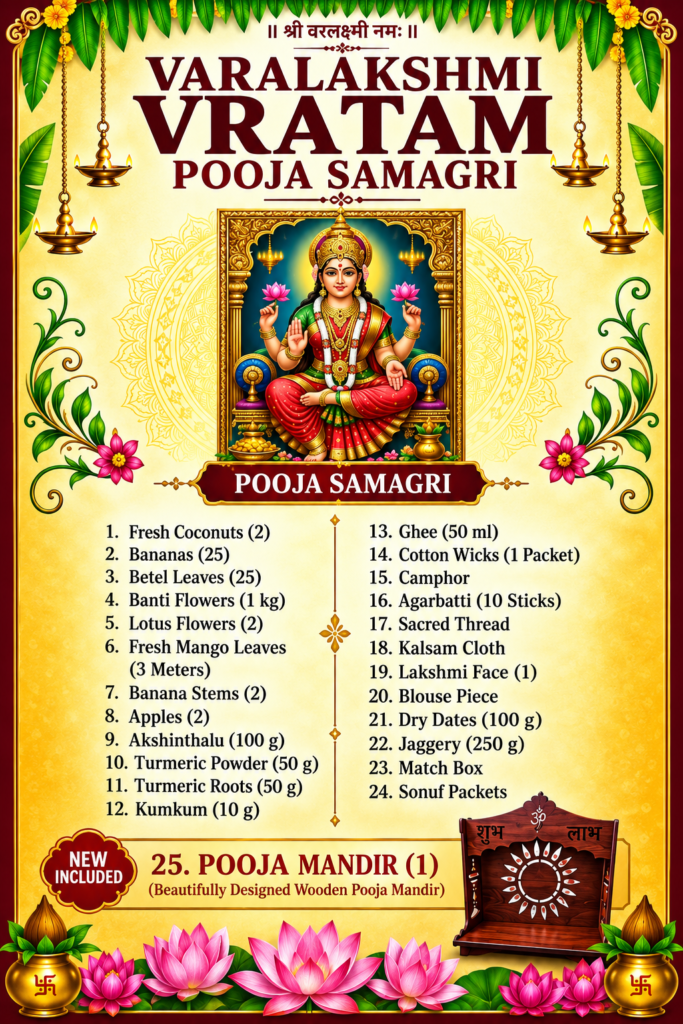
Based on the Varalakshmi Vratham Pooja Samagri shown in your product image, the collection includes the following items:
| No. | Pooja Item | Quantity Shown |
| 1 | Fresh Coconuts | 2 |
| 2 | Bananas | 25 |
| 3 | Betel Leaves | 25 |
| 4 | Banti Flowers | 1 kg |
| 5 | Lotus Flowers | 2 |
| 6 | Fresh Mango Leaves | 3 meters |
| 7 | Banana Stems | 2 |
| 8 | Apples | 2 |
| 9 | Akshinthalu | 100 g |
| 10 | Turmeric Powder | 50 g |
| 11 | Turmeric Roots | 50 g |
| 12 | Kumkum | 10 g |
| 13 | Ghee | 50 ml |
| 14 | Cotton Wicks | 1 packet |
| 15 | Camphor | Included |
| 16 | Agarbatti | 10 sticks |
| 17 | Sacred Thread | Included |
| 18 | Kalsam Cloth | Included |
| 19 | Lakshmi Face | 1 |
| 20 | Blouse Piece | Included |
| 21 | Dry Dates | 100 g |
| 22 | Jaggery | 250 g |
| 23 | Match Box | Included |
| 24 | Sonuf Packets | Included |
| 25 | Wooden Pooja Mandir | 1 |
Important: Quantities and availability should be checked against the current product listing before purchase, as product contents can change.
Varalakshmi Pooja Samagri Checklist
Use this checklist while preparing for the festival:
Kalash & Decoration
- Kalash
- Coconut
- Mango leaves
- Kalsam cloth
- Lakshmi face/decorative element
- Flowers
- Banana stems
- Sacred thread
Offerings
- Bananas
- Apples
- Dry dates
- Jaggery
- Coconut
- Betel leaves
- Betel nuts, according to family custom
- Akshinthalu
Pooja Essentials
- Turmeric powder
- Turmeric roots
- Kumkum
- Cotton wicks
- Ghee or oil
- Camphor
- Incense sticks
- Match box
Traditional Decorations
- Banti/marigold flowers
- Lotus flowers
- Mango leaves
- Banana stems
- Blouse piece
- Other family-specific decorations
Purpose of Important Pooja Items
Different materials used during Varalakshmi Pooja have traditional and devotional significance.
Coconut
Coconut is commonly used as an auspicious offering and is also associated with Kalash preparation in many Hindu rituals.
Mango Leaves
Fresh mango leaves are traditionally used with the Kalash and for festive decoration.
Turmeric and Kumkum
Turmeric and kumkum are important traditional pooja materials and are commonly used during worship and auspicious ceremonies.
Flowers
Fresh flowers are offered to Goddess Lakshmi and are also used to decorate the pooja area.
Fruits
Fruits such as bananas and apples are commonly offered as naivedyam or devotional offerings.
Ghee and Cotton Wicks
Ghee and cotton wicks are used for lighting traditional lamps during the pooja and aarti.
Camphor and Incense
Camphor and incense sticks are commonly used during aarti and worship according to family practice.
Sacred Thread
Sacred thread is an important component of many Varalakshmi Vratham traditions, although its exact use may vary by family and region.
How to Prepare for Varalakshmi Vratham
A simple preparation plan can make the festival much easier.
Step 1: Make Your Family’s Checklist
Before shopping, write down the items your family traditionally uses.
Step 2: Purchase Non-Perishable Items Early
Buy turmeric, kumkum, cotton wicks, camphor, incense, sacred thread, and other shelf-stable materials ahead of time.
Step 3: Arrange Fresh Items
Purchase flowers, fruits, coconut, and mango leaves closer to the pooja so they remain fresh.
Step 4: Clean the Pooja Space
Clean the area and prepare the platform or mandir where the pooja will take place.
Step 5: Organize the Samagri
Keep small items together in containers or trays so they are easy to find during the ceremony.
Step 6: Prepare Prasadam
Prepare the traditional prasadam or naivedyam followed by your family.
Step 7: Follow Your Family Tradition
Complete the pooja according to your family’s customary procedure, prayers, and timings.
Common Mistakes to Avoid
Forgetting Small Items
Camphor, cotton wicks, incense sticks, match boxes, kumkum, and sacred thread are easy to overlook.
Buying Fresh Items Too Early
Flowers, leaves, fruits, and coconuts should be purchased at an appropriate time so they remain fresh.
FAQ
1. What is Varalakshmi Vratham Pooja Samagri?
It is the collection of traditional materials used for performing Varalakshmi Pooja.
2. What items are required for Varalakshmi Vratham?
Common items include coconut, flowers, fruits, mango leaves, turmeric, kumkum, lamps, wicks, camphor, incense, and offerings.
3. What should I buy for Varalakshmi Pooja?
Start with a family-specific checklist and add the commonly required pooja, decoration, and offering materials.
4. Is a Varalakshmi Pooja kit useful?
Yes. It can simplify shopping and help organize commonly required materials.
5. Can I perform Varalakshmi Vratham at home?
Yes. Many families traditionally conduct the vratam at home.
6. What fruits are used for Varalakshmi Pooja?
Bananas, apples, and other fruits may be offered according to family tradition.
7. Which flowers are used for Varalakshmi Pooja?
Lotus and marigold/Banti flowers are commonly used.
8. Is coconut required for Varalakshmi Pooja?
Coconut is commonly included in traditional pooja preparations, particularly in Kalash-related rituals.
9. What is needed for the Lakshmi Kalash?
Requirements vary, but coconut, mango leaves, cloth, turmeric, kumkum, and other auspicious materials are commonly used.
10. Is fasting required for Varalakshmi Vratham?
Fasting practices vary according to family customs and individual circumstances.
11. What is the best way to prepare pooja items?
Create a checklist and arrange non-perishable and fresh materials separately.
12. Can beginners perform Varalakshmi Vratham?
Yes, beginners can participate by following their family’s traditional instructions.
13. How many items are in a complete Varalakshmi kit?
The number varies by product. The SS Farms collection shown here lists 25 items.
14. Does a pooja kit include fresh flowers?
Some kits may include them, while others may not. Always check the product’s current contents.
15. Is a wooden mandir necessary?
No. It is a convenient decorative addition rather than a compulsory requirement.
16. What are the main pooja essentials?
Turmeric, kumkum, flowers, fruits, coconut, lamps, wicks, camphor, incense, and other customary offerings are commonly used.
17. When should I buy Varalakshmi Pooja items?
Buy non-perishable items early and arrange fresh materials closer to the festival.
18. What should I check before buying a pooja kit?
Check the item list, quantities, fresh-item availability, packaging, and current product information.
19. Can I use my own family pooja items with a kit?
Yes. You can add or replace items according to your family’s traditional requirements.
20. Where can I find Varalakshmi Pooja Samagri online?
Online pooja stores such as SS Farms offer collections designed to make festival preparation more convenient.
Make Your Varalakshmi Vratham Preparation Easier
Varalakshmi Vratham is a meaningful occasion centered on devotion, family traditions, and worship of Goddess Lakshmi. Preparing the required Varalakshmi Vratham Pooja Samagri in advance can make the celebration more organized and reduce last-minute shopping.
If you are looking for a convenient collection of Varalakshmi Pooja Items, explore the available Varalakshmi Vratham Pooja Samagri from SS Farms.
Conclusion
Varalakshmi Vratham is a sacred occasion celebrated with devotion, family traditions, and prayers for prosperity and well-being. Having the required Varalakshmi Vratham Pooja Samagri ready in advance makes the preparation easier and helps you perform the pooja without missing essential items.
From coconuts, betel leaves, flowers, fruits, turmeric, kumkum, camphor, cotton wicks, and sacred thread to other traditional pooja essentials, each item has an important place in the celebration. Preparing the pooja items beforehand also allows you to focus more peacefully on the rituals and prayers.
Whether you are observing Varalakshmi Vratham for the first time or following a family tradition, a properly prepared pooja setup can make the celebration more organized and meaningful.
Prepare your pooja samagri in advance, follow your family traditions, and celebrate Varalakshmi Vratham with devotion and joy.
Shop and explore: https://ssfarms.co.in/